
In July 2026, my team at TechEmulsion put 17 AI agents into production for one ecommerce group that runs several brands across Europe. The agents share a task board, hand finished work to each other, and stop at a human approval before anything spends money or reaches a customer. That system answers the question in the title. Yes, multiple AI agents collaborate on complex projects, and they do it every day.
The harder question is the one agency owners bring to me on sales calls. You have used AI for single tasks, and now you want it to run a whole workflow: research a client, build a content brief, draft the content, check it, and send it for approval. Does that workflow need several specialist agents, or will one agent and some plain code do the job with less supervision? This post answers that from what we built, what broke, and the rule I use to decide.
Can multiple AI agents collaborate on complex projects?
Yes. Multiple AI agents can collaborate on complex projects when each agent owns one responsibility, shares a task board that records state, and hands finished work to the next agent only after a check. TechEmulsion runs 17 agents this way for one ecommerce group, with human approval before any ad spend or publication.
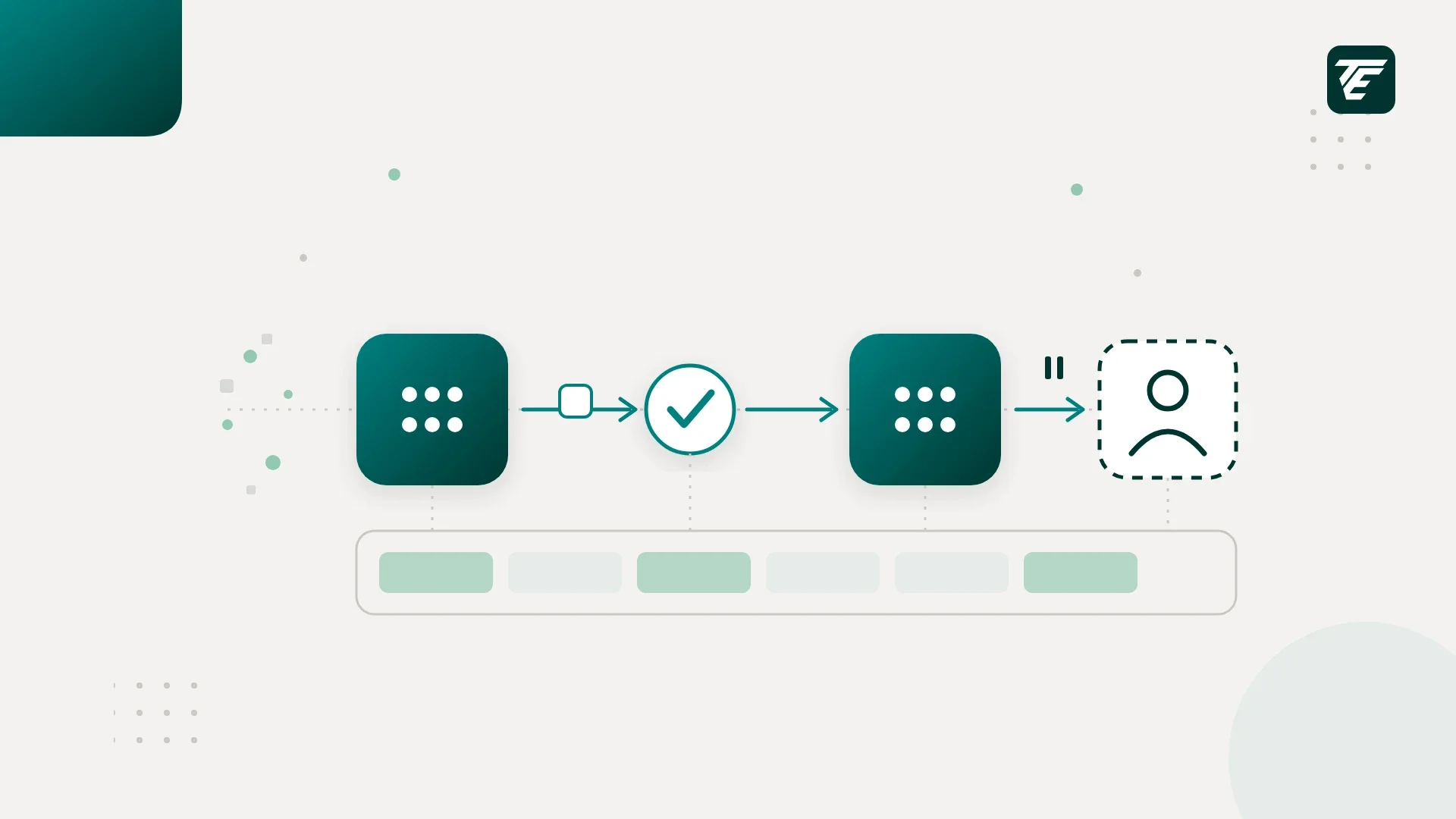
A multi-agent system is a set of AI agents, each with its own job, tools and permissions, that pass work between them to finish something none of them could finish alone. The word that matters in that definition is pass. Collaboration between agents is a chain of handoffs, and every handoff needs three things: a place where the current state lives, a clear signal that work is ready for the next stage, and evidence that the output is usable.
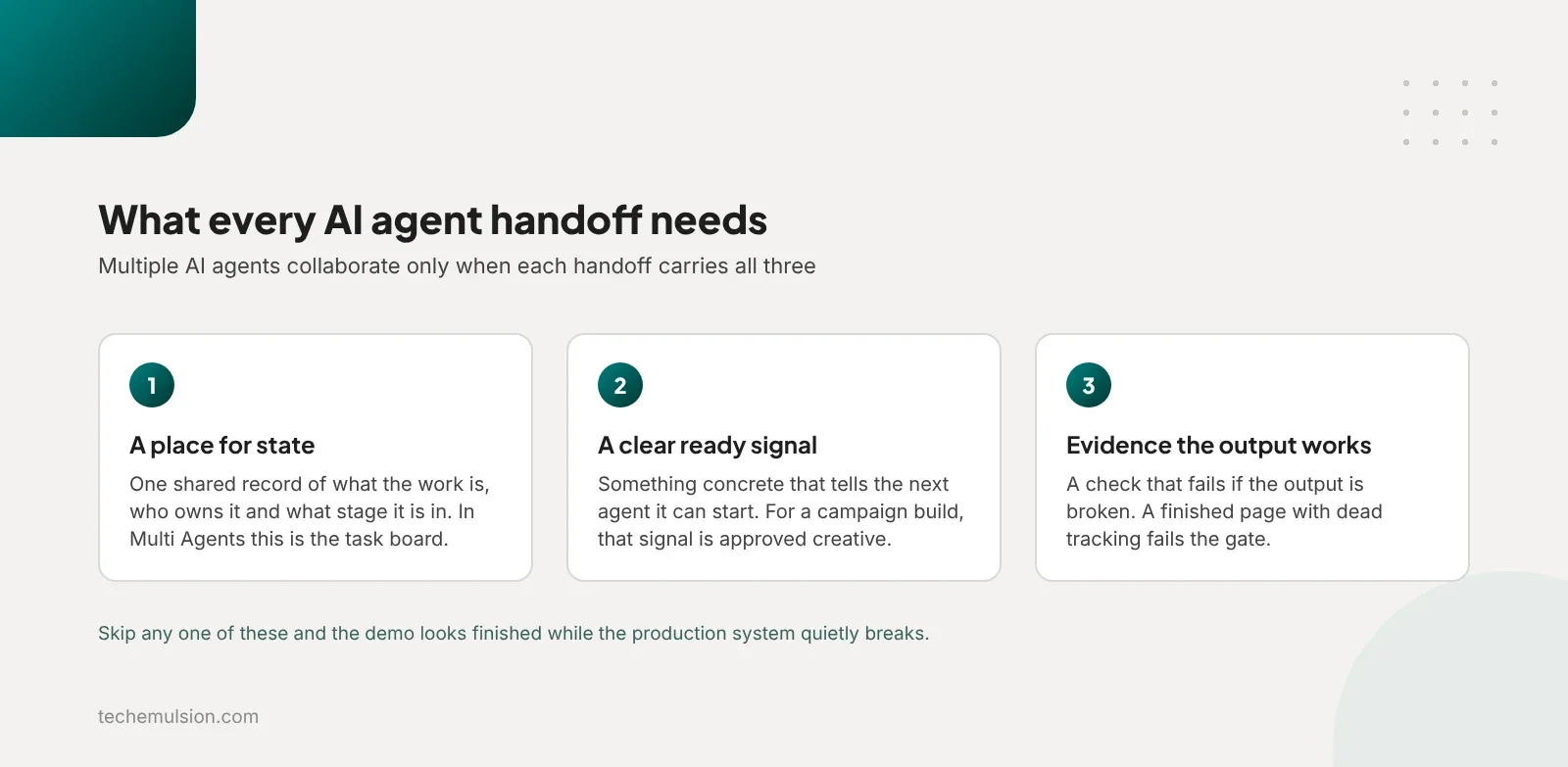
A complex project, for an agency, is a workflow that crosses several tools and several people, and every one of those crossings is a handoff. Get those three things right and agents collaborate well. Skip any of them and you get a demo that looks finished and a production system that quietly breaks.
What a working multi-agent system looks like
I'm Hassan, CEO of TechEmulsion. The most complex multi-agent system we have shipped is an AI workforce built for Interactive Ecommerce LLC. We call it Multi Agents, so that name below refers to the system itself. Markus runs several ecommerce brands in Europe, including Meo Nutrition, VitaNord and Dermao.
We led delivery and still own agent operations. The system was live and in daily use by July 2026, and our production inspection on 31 July 2026 confirmed it.
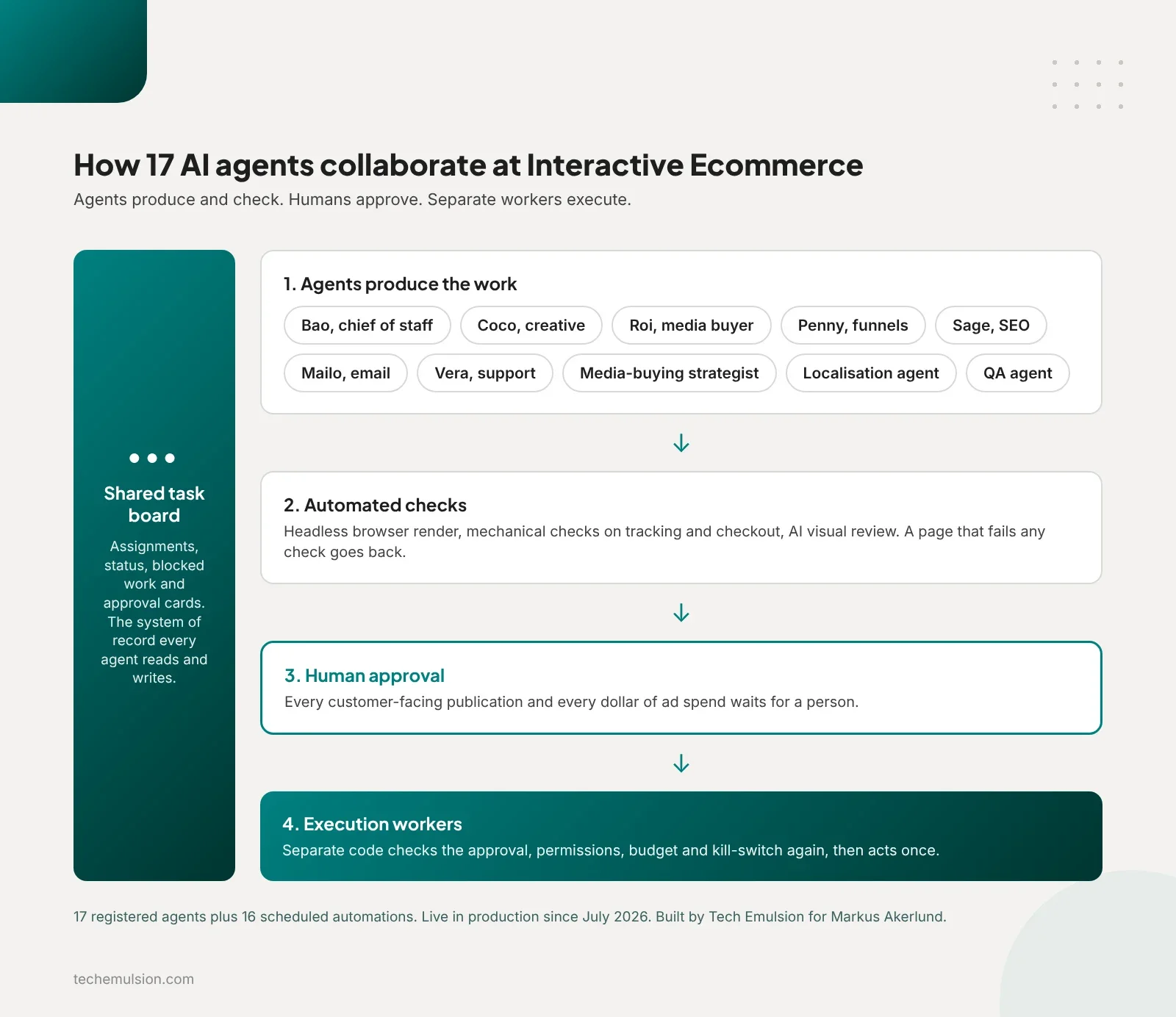
Multi Agents has 17 registered agents, including seven persistent conversational agents the team can talk to, plus 16 scheduled automations that create and assign work. These are the main roles, and each one owns one part of the business:
- Bao, chief of staff: owns the daily business briefing, agent activity summaries, task chasing and leadership meeting preparation.
- Coco, creative: produces ad concepts and images, researches competitor advertising and applies each brand's voice.
- Roi, media buyer: reads campaign performance and builds campaigns with the correct tracking. Everything is created paused and submitted for launch approval.
- Penny, funnels: builds advertorials, landing pages, checkouts, order bumps and upsells, then checks each page for copy issues, tracking faults and mobile performance.
- Sage, SEO: researches topics and search results, writes articles and stages them for approval.
- Mailo, email: produces email campaign candidates with checked imagery and reports on campaign performance.
- Vera, customer service: classifies support emails, looks up orders and drafts replies in the customer's language. It runs in review-only mode and cannot send.
- A media-buying strategist proposes budget changes with the reasoning attached to each decision.
- A localisation agent adapts proven funnels for new countries, including language, currency, pricing and checkout settings.
- A QA agent checks expected daily output and reports what completed, failed or needs attention. This is separate from the automated page QA described later, which checks individual pages.
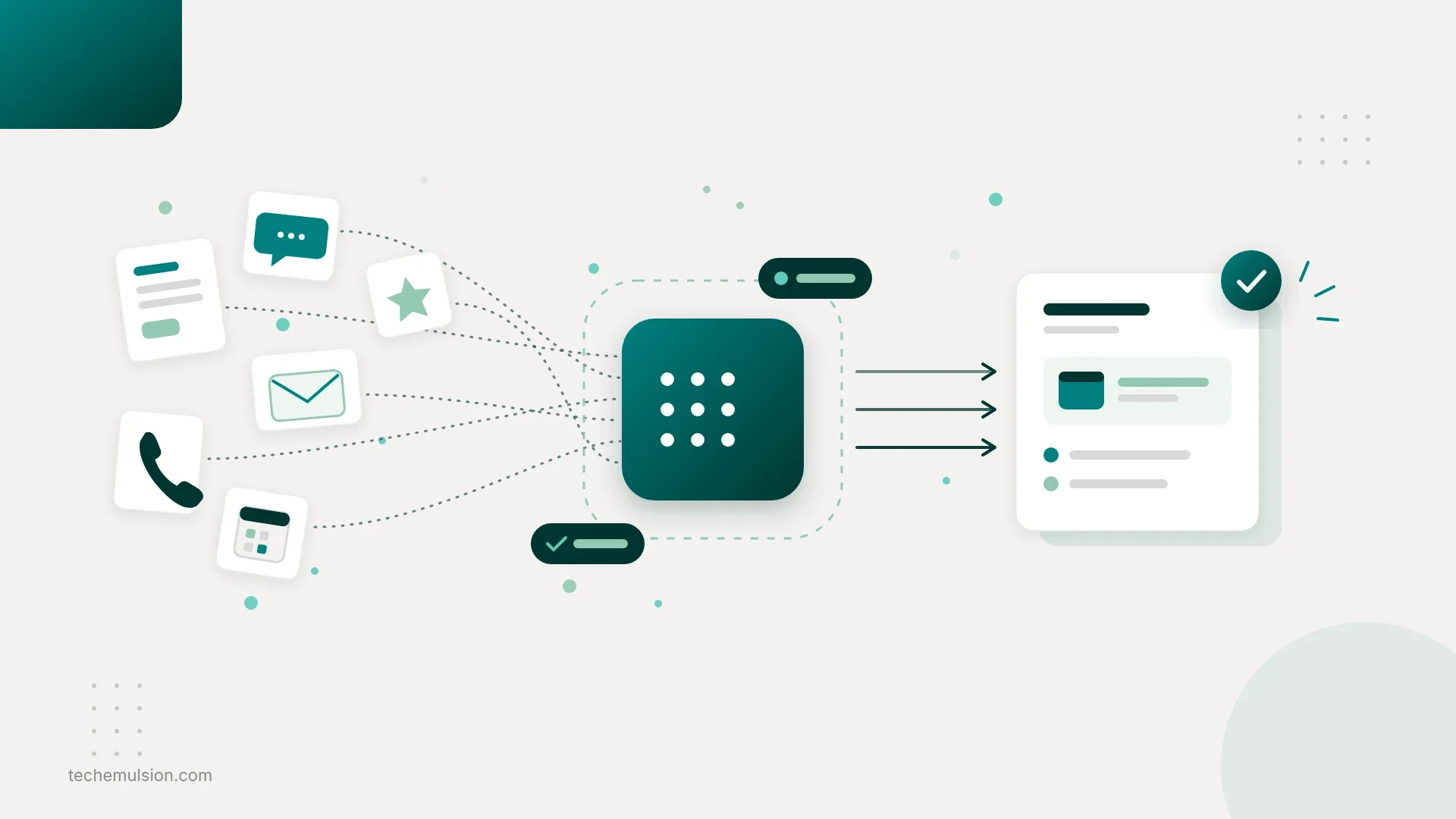
The agents connect to Meta Ads, Shopify, Klaviyo, Slack, FunnelStudio, Telegram, Google Drive and PostHog. Coco's approved creative feeds Roi's campaign build, page production passes automated quality checks before human sign-off, and Bao pulls the day's work and outstanding decisions into one briefing.
One documented example: 65 localised product review and comparison pages were built by one agent and cross-checked by another within a single day. That figure comes from the project's task board. It covers production and checking, and I am not claiming all 65 were published that day.
The agents produce and check the work. Customer-facing publication and advertising spend require human approval, and separate execution workers carry out the approved actions. That split is the design decision everything else depends on.
How do AI agents hand work to each other?
The agents coordinate through a shared task board and recorded workflow state. The board is the operational system of record: assignments, progress, blocked work and approval cards. Creative files live in shared cloud storage, the campaign itself lives in Meta, and Slack gives the Interactive Ecommerce team a way to talk to the agents and receive updates.
Here is one handoff end to end, from Coco's creative to a live campaign:
- Coco produces the creative. It generates assets from the product and brand context. The creative passes automated quality checks and goes for approval. Generated assets are kept in shared cloud storage.
- Approved creative becomes available for a product. That is the trigger for the campaign-building stage. Roi downloads the approved assets and resolves the correct Meta brand page, ad account and tracking pixel. If a mapping is missing, Roi stops. It does not guess.
- Roi builds the campaign in Meta. It creates the campaign, ad sets and ads in a paused state, verifies the build, and creates a launch-approval card showing the number of ads and the daily budget.
- Markus, or another approver with the right permissions, approves the launch. Moving that card to Done triggers the execution path. A separate worker checks the spend kill-switch, the approver's permissions and the budget again before activating the campaign. A one-shot activation marker, a record that says this approval has already been used, prevents the same approval from launching the campaign twice.
- The result is recorded. The system checks the campaign's status and landing page, then writes the outcome to its activity feed and job history.
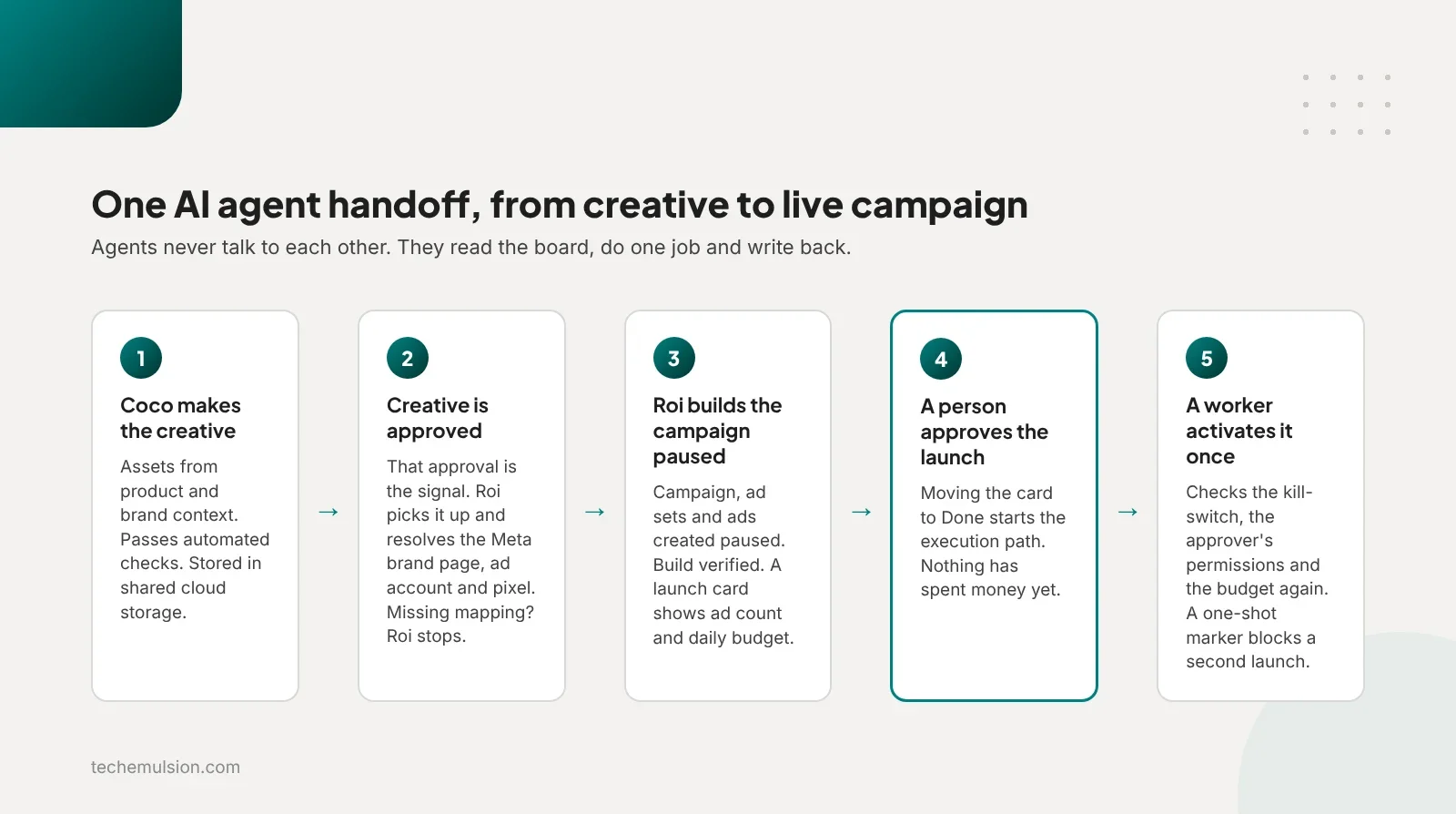
Notice what the agents never do. Coco never talks to Roi directly, and Roi never activates anything. Each agent reads the state from the board and storage, does its job, and writes the result back. That is what makes the chain debuggable, because the team can see which stage produced which output and what the next stage received.
Under the hood, the runtime is self-hosted across two production hosts, with a web control plane (the screen where the team sees agents, schedules and tasks), scheduled agent processes and background workers. A 60-second scheduler picks up ready work, and media buying runs on a 30-minute cycle. We build this kind of system as agentic AI engineering, and where the state lives and who is allowed to act on it matter more than the orchestration layer.
Tech Emulsion is an official Anthropic Claude Partner, and my own background is in computer vision research and R&D engineering. That engineering work taught me that the handoffs between stages fail far more often than the model inside any single stage.
How do AI agents catch each other's mistakes?
Agents catch mistakes when a check with evidence sits inside the handoff. A second agent giving an opinion on the first agent's output is a much weaker check. We learned the difference the hard way.
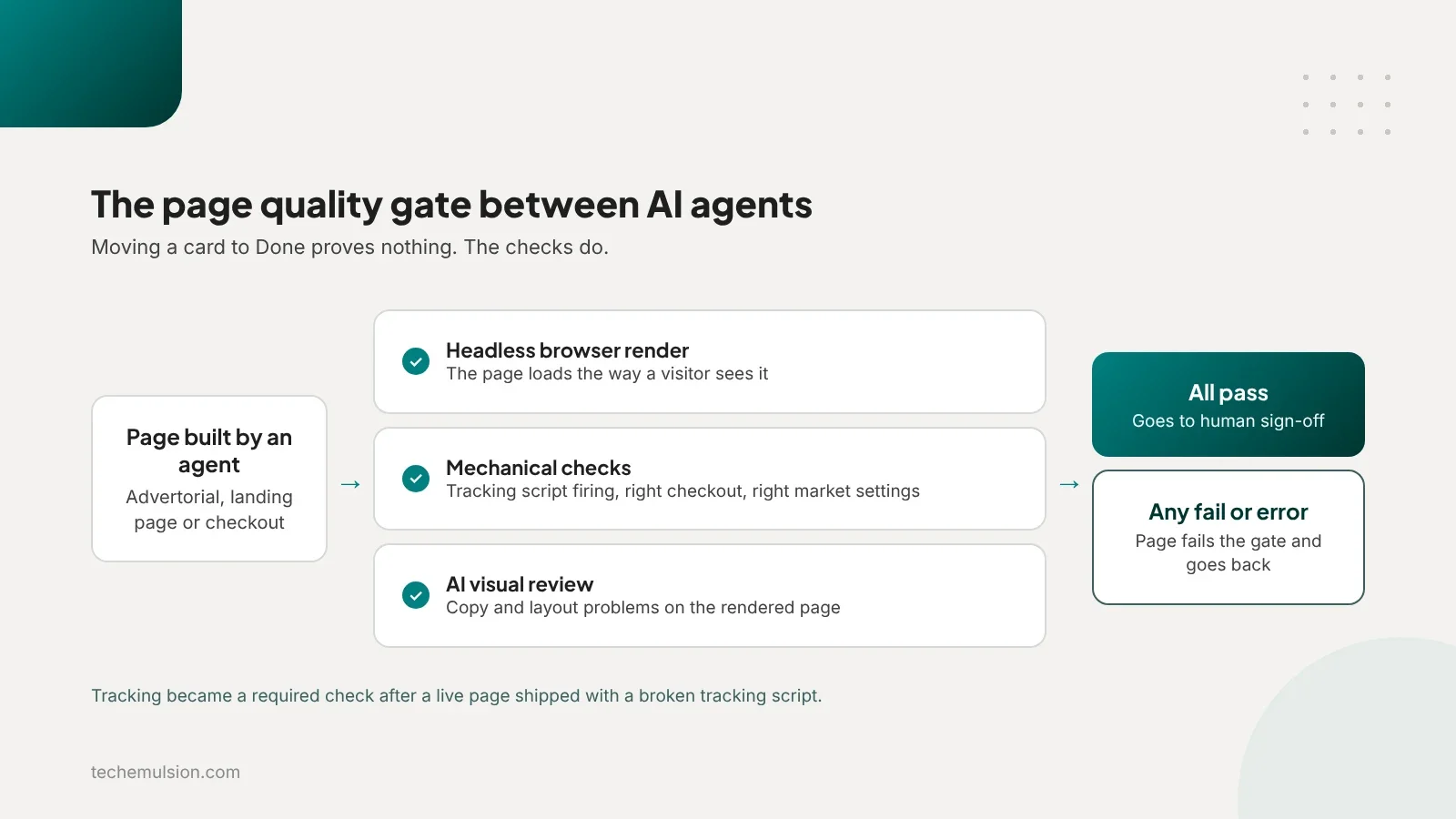
Ads were sending traffic to a live landing page while a broken tracking script meant the page was reporting no conversions. The page looked finished, the copy was fine, and the task card was in Done. Tracking was not part of the quality gate at the time. The media-buying agent uses campaign performance to prepare its recommendations, so missing conversion data made those recommendations less reliable at the same time.
The cost was ad spend running against a page with broken measurement. We do not have a confirmed amount, and I would not describe all of that spend as lost, because the traffic was real. The documented problem was that we could not see the conversions.
The fix was to treat tracking as a required quality check, in the same gate as copy and mobile performance. Automated page QA in Multi Agents now combines three things:
- A real headless browser that renders the page the way a visitor sees it.
- Mechanical checks that confirm the tracking script, the right checkout and the right market settings are present and firing.
- AI visual review that reads the rendered page for copy and layout problems.
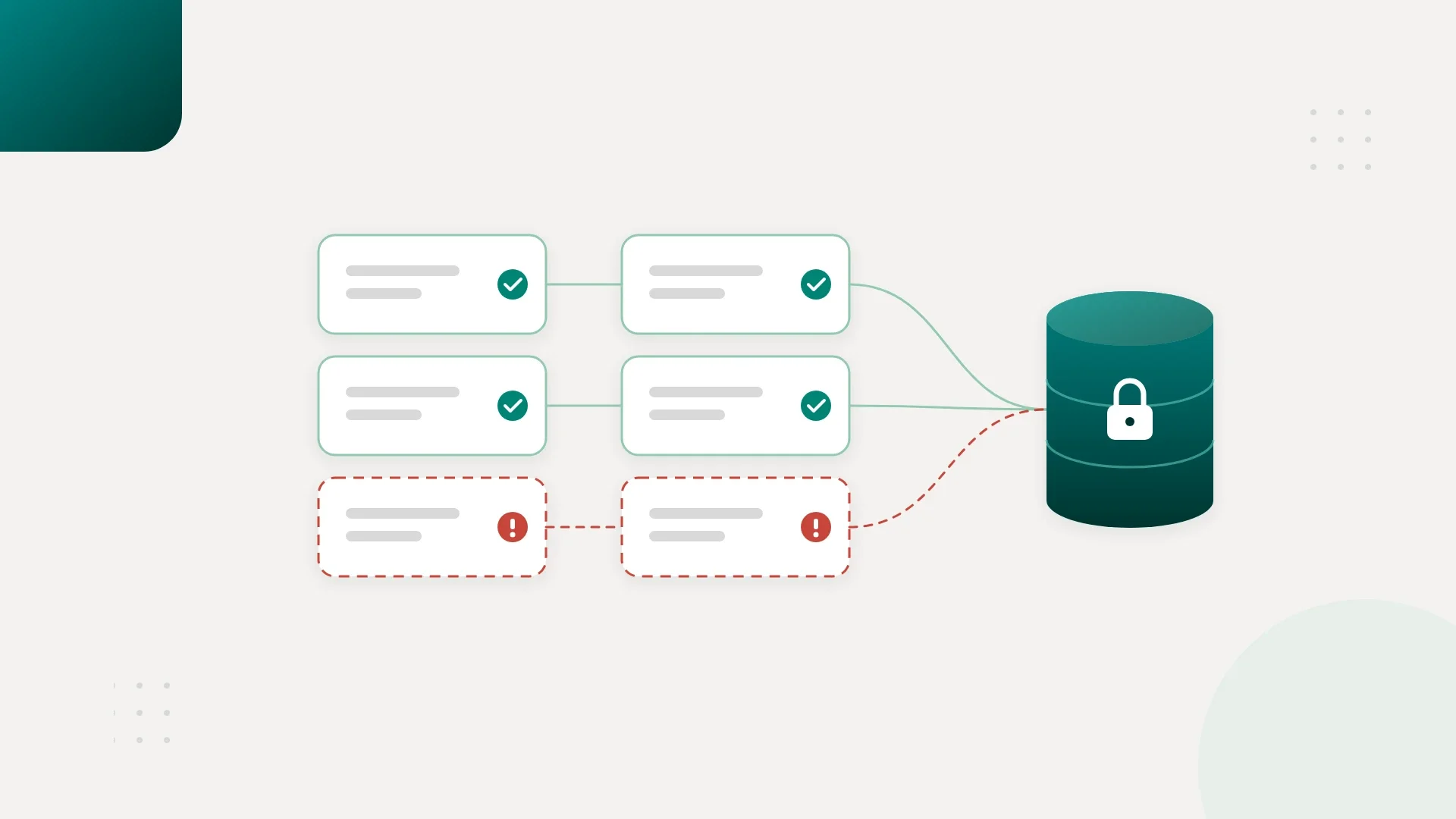
If any check fails or errors, the page fails the gate. Completing the build or moving a task card to Done establishes nothing about whether the page works. The evidence has to come from the check.
This is also why the 65-page batch had two agents on it. One built the pages, and a separate agent cross-checked them against specific acceptance criteria. Independent review is a legitimate reason to add an agent, as long as the reviewer checks against something concrete and has the tools to gather evidence.
Where does the human fit in a multi-agent workflow?
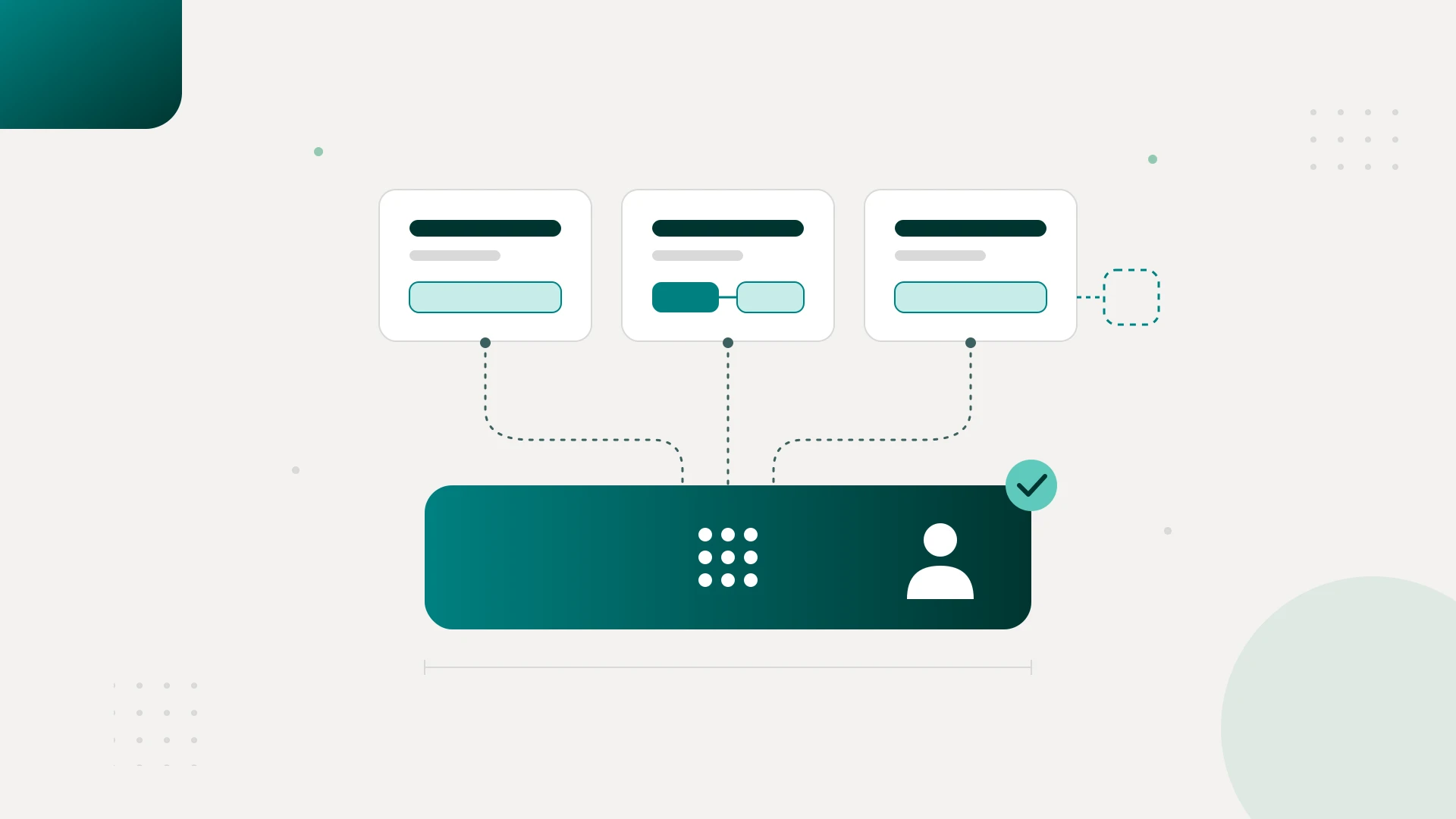
In Multi Agents the human sits at two boundaries: publication to customers and advertising spend. Everything before those boundaries runs on its own. Everything at those boundaries waits for a human approver.
The approval has to identify a specific action. When Markus approves a campaign launch, he sees the number of ads and the daily budget on the card, and the execution worker then checks his authority, the budget and the spend kill-switch before activation. A general instruction to the agent to ask before spending would establish none of that. The limit lives in the execution code and the account permissions, so the agent cannot talk its way past it.
Vera, the support agent, shows the other side of this. It classifies incoming emails, looks up orders and drafts replies in the customer's language, and it cannot send. The team inspects the drafts, and if those drafts prove reliable over time, the team can decide to give Vera more autonomy with the evidence in front of them. That is how trust gets built with an agent: the team sees the output and knows exactly what the system can and cannot do.
My rule across every build: broad access to prepare work, narrow authority to act. Anything that spends money, changes a live client system or communicates externally needs human approval. If I cannot enforce a boundary in permissions, I do not connect that account. I covered the task-by-task version of this in which marketing tasks AI agents can fully automate.
Does your workflow actually need multiple AI agents?
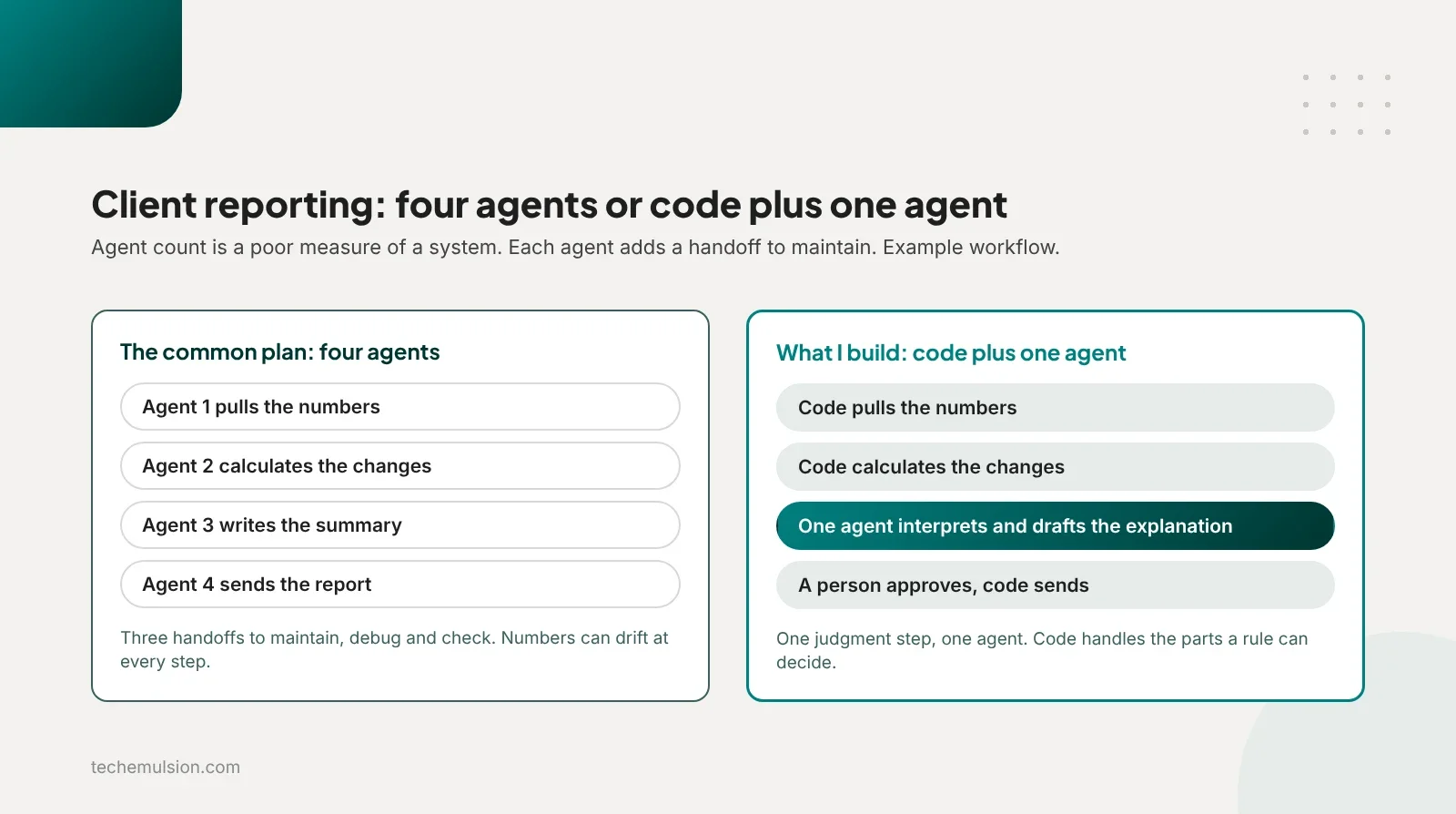
Agent count is a poor measure of how good a system is. Every extra agent adds a handoff you have to maintain, debug and check.
Client reporting is where I see agencies reach for several agents first. The plan usually looks like one agent to pull the numbers, one to calculate the changes, one to write the summary and one to send it. Fetching data, calculating month-over-month changes and sending an approved report are all ordinary code, and code is cheaper to run and easier to test than an agent for all three.
The one step that needs judgment is interpreting the results and drafting the explanation, and that is one agent. That is exactly how we set up automated client reporting for agencies.
The same applies to content. Research, writing and editing feel like three roles, so people build three agents. One agent can work through those steps in sequence with the same context, and giving each step a name does nothing to show that splitting it improves the result. Our AI content engine for agencies runs research, drafting and editing as one agent with a human review at the end.
A workflow earns a second agent when it needs a separate responsibility with its own context, permissions or independent review, and that separation improves the finished work enough to pay for another handoff. Four questions decide it:
- Does this step need judgment, or can a rule handle it? If a rule can handle it, write code.
- Does it need different context or tools from the first agent? Coco needs brand voice and competitor ads. Roi needs account mappings, pixels and campaign settings.
- Does it need restricted permissions or a separate reviewer? Creative production and campaign construction sit on opposite sides of an approval boundary, so they are separate agents.
- Can you define exactly what it receives and what a successful output looks like? If you cannot write the acceptance criteria, you cannot build the handoff.
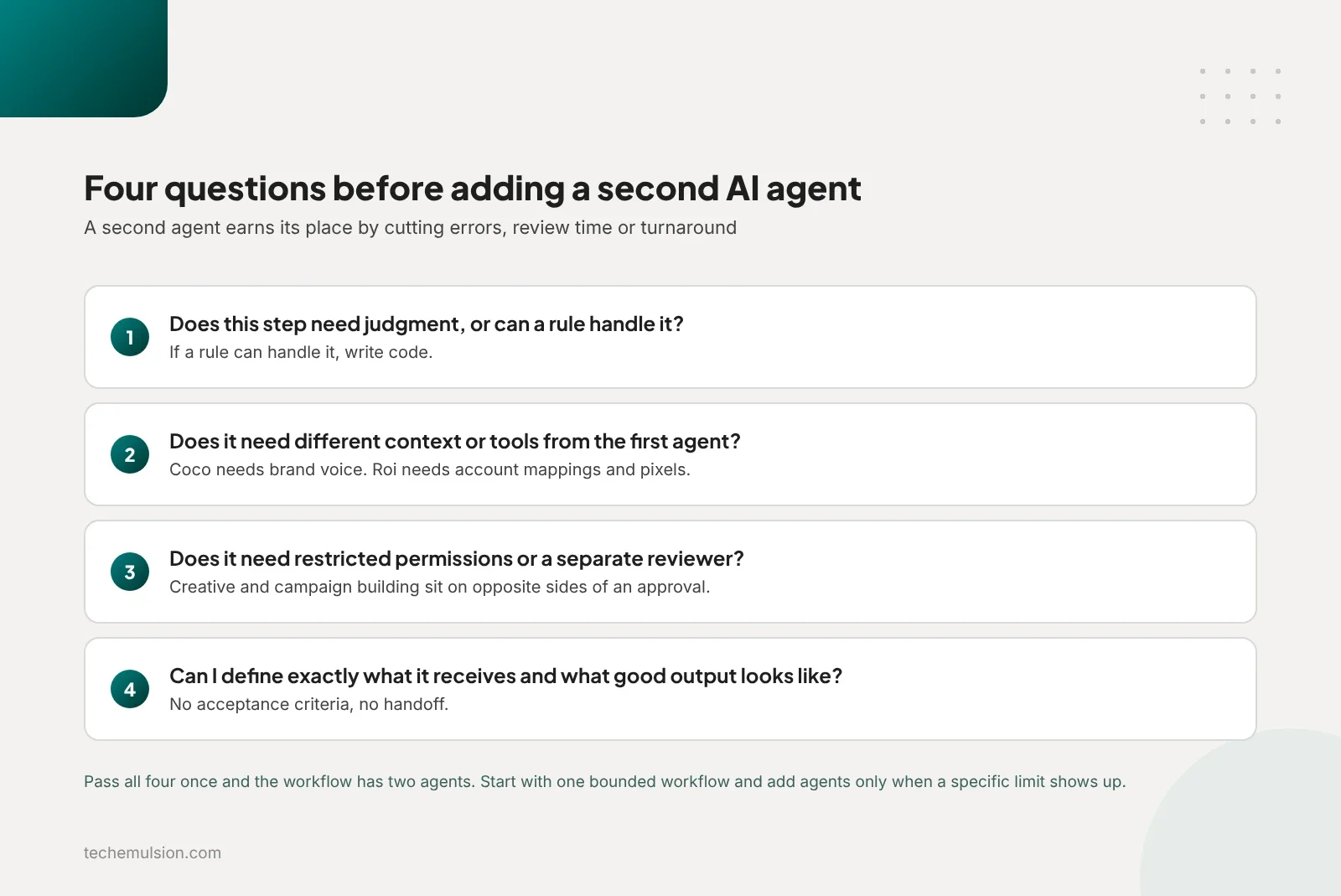
If a workflow passes those questions once, you have two agents. Start with one bounded workflow and add agents when a specific limitation shows up, so each new agent earns its place by cutting errors, review time or turnaround. The same thinking applies to whether to build at all, and I wrote up the full decision in should you build or buy your AI marketing agent.
What the multi-agent tutorials leave out
Getting several agents to complete a task once looks much closer to a finished product than it is, and most tutorials stop there. Five assumptions in those posts will hurt you in production.
Choosing a framework settles the architecture
A framework gives you tools for the hard decisions. You still own the decisions: where the authoritative state lives, what makes work ready for the next agent, who can approve it, and what happens after a partial failure. None of those are answered by picking a library.
If it fails, retry
What if the email was sent, but the process died before recording success? A retry sends it again. In Multi Agents, interrupted publishing or email execution is flagged for human verification whenever the outcome is uncertain, and campaign activation carries the one-shot marker so a retried approval cannot launch twice. Retries are only safe for actions you can confirm did not happen.
A reviewer agent means the output is correct
A second agent can agree with the first and miss the problem. Our tracking incident is the proof: the page read well and the tracking was dead. Each reviewer needs evidence and specific acceptance criteria, which is why we pair AI review with browser rendering and mechanical validation.
Human approval makes the system safe
Approval is only as safe as the action it names. "Ask before spending" is a wish. "Launch these ads at this daily budget", with the budget and the approver's permissions re-checked in code before activation, is a boundary.
More output means less work for the team
Output is only half the ledger. Review, corrections, failed runs and maintenance go on the other side. We can substantiate 65 pages built and cross-checked in a day, and we cannot turn that into a weekly hours-saved claim without measuring the human effort around it.
Collaboration between agents includes incomplete work, uncertain outcomes and rejected outputs. Those paths deserve as much design attention as the happy path in the demo.
What agency owners push back on
Am I paying for automation and then paying someone to check everything?
Review time is part of the cost, and the fair way to judge a system is work removed against time spent reviewing, correcting and maintaining it. In Multi Agents, automated checks run before anything reaches the team, so Markus approves finished assets with previews and specific decisions. We have not measured his review time, and I will not promise a number of hours saved.
What stops an agent from spending money or sending something wrong?
The limits live in the tools and the execution code. In Multi Agents, Roi builds campaigns paused and a separate worker checks approval, permissions, budget and the kill-switch before anything goes live, and Vera drafts replies it cannot send. Give an agent the ability to prepare an action, and withhold the ability to perform it until the team trusts the output.
Who fixes it when it breaks?
Someone has to own it, and that someone is usually an engineer. For Multi Agents, we handle agent operations and maintenance, backed by process monitoring, automatic restarts, daily output checks and a separate alerting channel. An engineer on our side still has to investigate bad integrations, incorrect outputs and changes in the connected platforms, so make the support owner, the maintenance scope and the escalation path explicit before you start. I wrote about why this layer decides whether AI works in production in AI ops and ownership.
How to start with one workflow
Pick one recurring workflow with a clear owner. A first scope that works:
- One recurring workflow with a named owner on the agency side.
- Defined inputs, outputs and integrations, written down before any agent is built.
- Human approval for every consequential action: spend, publication, outbound communication.
- Failure handling and an activity log, so uncertain outcomes get flagged and nothing retries blindly.
- A pilot that measures output quality and total human effort, including review and corrections.
Run that pilot before adding a second agent. If the pilot shows a step that needs separate context, permissions or review, you have found your second agent with evidence behind it.
Agencies with an ongoing backlog of this kind of work sometimes skip the project route and bring in capacity directly. Tech Emulsion offers embedded engineers starting at $15 per hour with a two-month minimum, and that price buys engineering capacity, with a finished multi-agent system scoped and quoted on its own. The way we run that engagement is covered in forward deployed engineering.
FAQ: questions people ask about AI agents working together
Can AI agents talk to each other?
They can, and in production I avoid it. In Multi Agents, people talk to the conversational agents in Slack, while the agents coordinate only by reading shared state from a task board and cloud storage and writing results back. That keeps every handoff visible and debuggable.
What is the difference between a multi-agent system and workflow automation?
Workflow automation runs fixed rules in a fixed order, and it is the right tool whenever a rule can decide the step. A multi-agent system adds agents that use judgment, with their own context and permissions, at the steps where rules fall short. In my experience, a production system is mostly automation with a few agents at the judgment points.
How many AI agents do I need?
Start with one. Add a second only when a step needs separate context, tools, permissions or an independent reviewer, and when you can write down exactly what it receives and what good output looks like. Multi Agents reached 17 agents because the business has that many separate responsibilities, and in my experience most agency workflows need far fewer.
What happens when one AI agent fails?
The work stops at that stage, and the failure has to be visible. In Multi Agents a QA agent checks expected daily output and reports what completed, failed or needs attention, and a separate alerting channel catches process failures. Nothing with an uncertain outcome is retried before a human looks at it.
How do AI agents share information?
They share it by writing to a common store and reading from it. In Multi Agents, the task board holds assignments, status and approvals, cloud storage holds the creative files, and the connected platforms hold the live campaigns and orders. Each agent reads what it needs from those places and writes its result back for the next one.
Find out whether your workflow needs one agent or several
Have a workflow that crosses several tools or people? Book an Agency Automation Audit and we will help you pick what to automate first and decide whether it needs one agent, several agents or a simpler workflow. It is the first step in AI automation for marketing agencies at Tech Emulsion. Book the audit and we will take it from there.